There are many different types of food packaging materials available. These include paper, plastics, metal and glass. The type of material you use will depend on the type of food you are packaging. For example, crisp snacks, hot burgers, frozen packs and juice bottles all require different materials. As Lahore is a hot city, the choice of material can matter even more because of the heat and delivery time.
This guide includes information on the most common packaging materials and what they are good and bad at.
Key Takeaways
- Choose a material that will provide a good barrier for your food. Whether your food is dry, oily, hot, frozen or liquid will affect which material you choose.
- Paperboard and cardboard are good for dry foods, bakery items and takeaway items.
- Plastic, foil and glass provide a better barrier but have issues with heat, weight and cost.
- Make sure the material is food safe.
- Test a sample with actual food.
Requirements for Packaging Materials
Food packaging materials should be able to hold the food, provide a good barrier against moisture, air and grease and be strong enough to handle. However, some materials may not be suitable for hot and oily foods. For example, a dry food may be fine in one material but a hot, oily food may not. Consider what you are packaging.
- Barrier: How good is the barrier against moisture, oxygen, light and grease.
- Strength: Can it be stacked, carried and delivered.
- Heat resistant: Can it withstand being put into the microwave or freezer.
- Weight and cost: How much extra weight will it add to your shipment and per unit.
- Printable: Can you print your logo and colours.
Common Types of Packaging Materials
Paperboard and cardboard
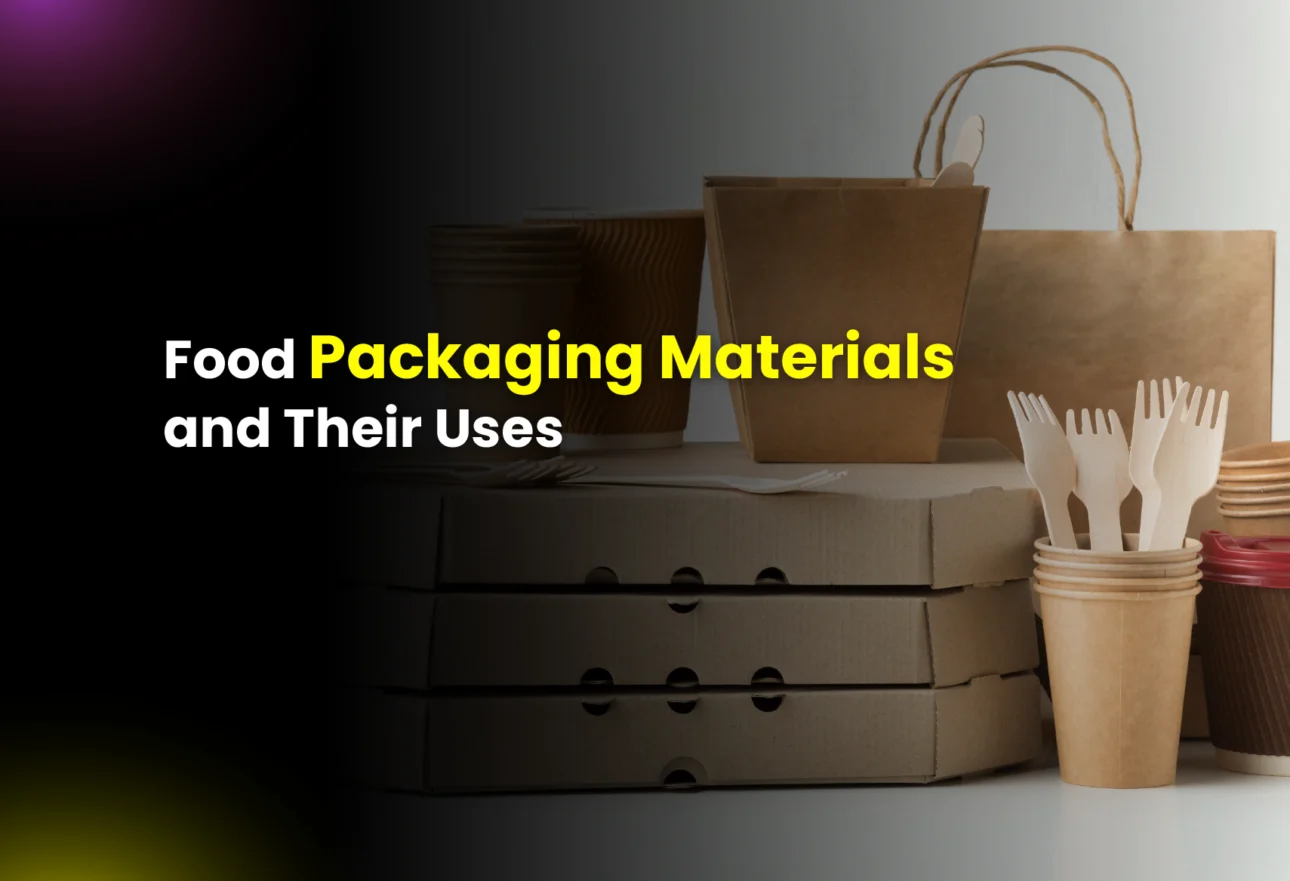
Easy to fold, lightweight and printable. Used for burgers, sandwiches, cakes, snacks and cereals. Not a great barrier against moisture. If your food is oily or wet you will need a grease proof coating or liner. AQ Printing House can print custom food boxes.
Kraft paper and board
Brown, natural looking material. Used for bags and wraps. Kraft is strong for its weight, making it a good option for bakery items and dry goods. Like other paper products, you will need a liner or coating for oily foods.
Corrugated board
This has a fluted middle layer, making it rigid. Often used for pizza boxes, delivery boxes and outer shipment boxes. Usually too bulky for small food boxes that need high quality printing.
Plastics
There are many different types of plastics. Manufacturers use PET for clear bottles and containers, polypropylene for hot food tubs, polyethylene for bags and frozen food films, and polystyrene foam for takeaway boxes that retain heat. Plastics provide a good barrier against moisture but can trap steam, so fried foods may become soggy. Check with your supplier what grade they are and what temperature they can withstand.
Aluminium foil and metal
Provides a good barrier against light, air and moisture. This helps keep food fresh for longer. Foil trays are great for baked and hot takeaway items. Metal cans are good for items with a long shelf life. Foil cannot be used in the microwave.
Glass
Does not react with food. Great for sauces, pickles, jams and drinks. Can be reused and provides a good view of the product. However, it is heavy and can break, which can increase your shipping costs.
Flexible laminated pouches
These have multiple layers of plastic film and sometimes foil. They provide a good barrier against air and moisture. Good for chips, spices, powders and ready mixes. Lightweight and low cost for shipping but difficult to recycle. Printing them needs a separate setup.
Types of Food and Recommended Materials
| Food Type | Recommended Material | Things to Consider |
| Dry snacks and popcorn | Laminated pouch or paperboard box | Snacks can go stale due to air |
| Hot or oily food | Grease proof paperboard or foil tray | Can trap steam |
| Sandwiches and wraps | Paperboard box or paper wrap | A loose fit lets fillings move |
| Cakes and bakery | Rigid paperboard box | Can get squashed due to soft walls |
| Frozen food | Polyethylene film or coated paperboard | Plain board can get weaker due to moisture |
| Liquid | Glass, PET or HDPE bottles, laminated cartons | Can leak and have weak seals |
| Tea and cereal | Paperboard carton with liner | Moisture can get in without a liner |
Dry snacks can be a good choice for printed paperboard boxes. See our custom popcorn boxes. Lunch items can be placed in custom sandwich boxes. Tea and breakfast items can be placed in custom tea boxes and custom cereal boxes with a liner.
Eco Friendly and Biodegradable Options
Eco friendly materials include paper, kraft board, moulded sugarcane fibre and plant based plastics (PLA). Paper and fibre are easiest to source and print. PLA becomes softer at reasonably low temperatures, so it would be better for cold items.
Biodegradable can vary depending on what material you have and how you dispose of it. Ask your supplier what it means and whether it can be used for hot, oily foods.
Considerations for Safety
- Check the material is food safe.
- Make sure printed ink and coatings are not touching the actual food.
- If your food is wet, oily or frozen, add a liner or barrier.
- Check what temperature it can withstand if it is going in the microwave or being used for hot food.
- Check it has a secure seal. If it pops open in the delivery bag it can ruin your order.
Before you order in bulk, pack a real order and send it on a test delivery. Leave it for the length of a normal delivery, then check for steam, grease marks, soft walls and a loose closure. If you sell fried or oily food, repeat the test in summer, when Lahore’s heat puts more pressure on the box.
Common Mistakes
- Choosing a cheaper option without considering how the food will behave in the box.
- Using plain board for oily foods.
- Sealing hot foods tightly, causing steam to build up.
- Not testing with real food and delivery.
- Assuming a material is eco friendly without checking.
Read our guide on choosing food packaging for restaurants.
Ready to pick the right packaging?
Still unsure what materials to use for your food? Browse our food packaging boxes and contact AQ Printing House to discuss your food, box size and print design.
Call us on:
Email: info@aqprintinghouse.com
Address: Office # 17, 18, 3rd Floor, Malik Arcade, New Anarkali Road, behind Abik Tomb, Lahore, 54000
FAQs
What is the best material for hot food?
Grease proof paperboard or a foil tray with a way to let steam escape.
What does food grade mean?
The material is safe to use for food packaging.
Is cardboard safe for food?
Yes, if it is food safe board with the correct coating or liner. Contact your supplier.
What materials do manufacturers use for frozen food packaging?
Polyethylene film, sealed trays or coated board that resists cold and moisture.
Are any biodegradable materials good for hot foods?
Some are and some aren’t. PLA can become softer when hot. Paper and fibre often work better.
Can my logo go on food packaging?
Yes. AQ Printing House can print your logo on custom food boxes.