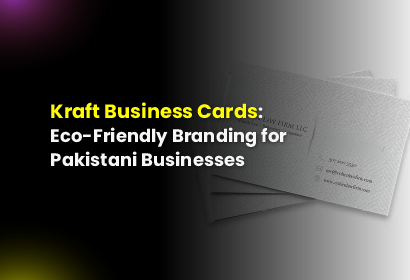
Kraft Business Cards in Pakistan: Eco-Friendly Branding for Beauty and Beyond
Walk into any co-working space or design market in Lahore or Karachi and watch what people do when they get handed a business card. Most cards get a glance and go straight into a pocket, forgotten by the time the person walks away. But every so often someone gets handed a brown, textured card that feels different in the hand, and they actually stop and look at it. That’s what kraft paper does for a business card. It doesn’t try to look expensive the way glossy white stock does. It looks intentional instead, and that’s usually enough to make someone remember who handed it to them. This is exactly why kraft business cards in Pakistan have started showing up more often among brands that actually care about first impressions.
I’ve worked with brands across Pakistan who switched to kraft business cards for very different reasons, a coffee roaster wanting something that matched their bags, a graphic designer tired of blending in with every other white card at networking events, a skincare brand trying to look as natural as their product claims to be. Doesn’t matter the industry really. If your brand has any kind of handmade, sustainable, or minimalist angle, kraft paper tends to just make sense the moment you see it printed.
Why Kraft Paper Reads Differently Than Regular Card Stock
Kraft business cards are printed on kraft paper, the same family of paper used for shopping bags and shipping boxes, made through a pulping process that keeps more of the natural wood fiber instead of bleaching it out. That’s where the brown color and the slightly rough texture come from. It’s not a coating or a filter effect, it’s genuinely a different kind of paper.
Regular business cards try to look flawless, smooth, bright white, sometimes glossy enough to catch light. Kraft cards do the opposite. The texture is visible, the color is earthy, and honestly that imperfection is the whole point. It signals something about the brand before anyone reads a single word on the card.
There are two versions worth knowing about. Natural kraft is the classic light brown you’ve probably seen on packaging everywhere. Recycled kraft uses post-consumer or post-industrial fiber and sometimes comes out a touch darker or more uneven in tone. Most brown kraft business cards you’ll see locally are natural kraft, since fully recycled stock is a bit harder to source consistently here.
The Actual Tradeoffs Nobody Tells You About
Kraft cards look great, but they’re not a free upgrade. A few things change once you move off white paper.
Color behaves differently. Black and dark navy ink print cleanly and hold up well against the brown. White, cream, and gold ink or foil create genuine contrast and tend to be the go-to combination for a reason, they’re the colors that actually pop. Light pastels though, pale pink, baby blue, anything soft, they basically disappear into the brown background. I’ve seen brands bring in a design that worked perfectly on white and then wonder why half the text is unreadable once it’s printed on kraft. It’s always the pastel colors that cause the problem.
Fine detail softens slightly. The texture that makes kraft paper look interesting also means very thin fonts or intricate line art won’t come out quite as crisp as they would on smooth coated stock. Medium weight fonts hold up much better.
Not every printer stocks it. Kraft is less commonly requested than white or cream card stock, so some printers need to special order it, which can add to your turnaround time if you’re on a deadline. Standard business card printing runs are usually faster simply because the stock is already sitting on the shelf.
Business Card Size in Pakistan, and Where People Get It Wrong
The standard business card size in Pakistan is 3.5 x 2 inches, same as what’s used across most of Asia and North America. This is what most local printers default to, kraft or otherwise. There’s a slightly different European size, 85 x 55 mm, floating around too, close enough to the standard that people don’t always notice the mismatch until their cards don’t fit a standard holder or wallet slot properly. Worth confirming which template your printer actually uses before you finalize a design file, especially if you’re also ordering a matching box or envelope sized around the cards.
Always Check a Mockup Before You Print
This one’s not optional if you want to avoid reprinting a whole batch. A kraft paper business card mockup shows you roughly how your design will actually look on the brown background before it hits a real print run. Screen colors and printed colors on a colored substrate behave differently. What looks fine in RGB on your laptop can shift once it’s actually printed.
A business card mockup won’t nail the exact shade of brown you’ll get. Kraft stock varies slightly batch to batch and printer to printer. But it will catch the big problems. Text that’s too light. Colors that shift in a way you didn’t expect. A logo that loses its edges once the texture is added in. It’s also worth looking at a few examples of the best business card designs done on kraft before you finalize your own. This helps you get a feel for what actually holds up on the texture versus what only looks good as a flat digital file. Catching that on a mockup costs nothing. Catching it after five hundred cards are printed costs you the whole order.
Mistakes That Keep Coming Up
A few things trip people up almost every time they switch to kraft for the first time.
- Reusing a white background design without adjusting the colors. This is the single most common issue, a logo or layout that worked fine on white just doesn’t translate directly.
- Going too thin on the font. Delicate, hairline fonts don’t hold up well against the texture, medium weight fonts print far more reliably.
- Not confirming paper thickness. Kraft cards come in different GSM weights, and a card that’s too thin ends up feeling flimsy, which undercuts the whole premium, handcrafted vibe you were going for. Most business cards land somewhere between 300 and 400 GSM, and it’s worth asking your printer directly rather than assuming.
- Skipping the packaging conversation. If you’re also getting kraft business card boxes or kraft business card envelopes made, get them ordered in the same batch as your cards. Getting the tone to match across separate orders is a lot harder than doing it all at once.
- Assuming kraft automatically means recycled. It doesn’t always. Some kraft paper is virgin pulp that’s simply unbleached, not recycled fiber. If sustainability is part of your brand story, ask your printer directly whether you’re getting recycled kraft or natural kraft, because they’re not the same claim.
Packaging That Matches: Boxes and Envelopes
Cards rarely exist in isolation once a brand starts thinking seriously about presentation. Kraft business card boxes get used at events, trade shows, and retail counters, usually holding fifty or a hundred cards at a time, and they carry the same natural, earthy look as the cards themselves.
Kraft business card envelopes show up less at everyday networking and more in mailed introductions, welcome kits, or gift packaging where a small set of cards travels alongside other branded materials. If you’re mailing anything out regularly, or bundling cards into a product unboxing experience, getting the envelope’s kraft tone to match your cards makes the whole thing feel put together instead of thrown in as an afterthought.
Finding a Printer That Actually Does Kraft Well
Kraft isn’t stocked everywhere, so it’s worth asking a few direct questions before committing to an order:
- Do they keep kraft paper in stock, or is it a special order that adds to your timeline?
- What GSM options do they actually offer, not just the one they push by default?
- Can they produce a mockup, physical or digital, before running the full batch?
What’s their minimum order quantity? Kraft sometimes only makes financial sense at higher volumes.
Do finishing techniques like foil stamping or letterpress actually work on their kraft stock specifically? Not every finish adheres the same way to uncoated, textured paper as it does to smooth stock.
It’s also worth comparing a few business card printing services directly rather than going with whoever’s closest or cheapest upfront, since consistency on kraft stock depends a lot on the specific printer’s equipment and calibration, not just the paper itself.
Get Kraft Business Cards from AQ Printing House
AQ Printing House keeps kraft paper as a standard stock option. You don’t have to special order it or wait around. They also carry matching kraft business card boxes and envelopes if you want your whole presentation to stay consistent. Whether you’re a coffee shop wanting something that matches your packaging, or a skincare brand leaning into a natural, sustainable image, the team can walk you through paper weight and ink colors that’ll actually show up. They’ll also get you a mockup before your full print run goes out. Custom business cards, kraft or otherwise, get built around your exact design. Nothing gets forced into a generic template. Get in touch for a sample and pricing before your next batch.
FAQs
Are kraft business cards more expensive than regular ones?
Not usually. Kraft is often comparable to or cheaper than standard uncoated stock, though heavily finished cards with foil or embossing will always cost more regardless of the paper underneath.
Can I still do a full color design on kraft paper?
Yes, but the brown base shifts how colors read compared to white stock. Worth checking a mockup or a physical sample first so nothing looks off once it’s actually printed.
What’s the standard business card size in Pakistan?
3.5 x 2 inches, same as most of Asia and North America. Some printers also work with a slightly different European size, so it’s worth confirming before you finalize your file.
Is kraft paper actually eco-friendly?
It generally involves less bleaching than standard white paper, and recycled kraft uses post-consumer fiber. Not all kraft is recycled though, so ask your printer directly if that claim matters to your branding.
Does kraft paper work for a more formal or corporate brand?
Not really. It tends to read as casual and artisanal, which works great for cafes, skincare, and handmade goods, but doesn’t usually fit a law firm or financial services look.
Can I get boxes and envelopes that match my kraft cards?
Yes, most printers offering kraft cards can do matching boxes and envelopes too. Ordering everything together in one batch keeps the tone consistent in a way that’s harder to pull off across separate orders.